Julie writes about her time at the British Equine Veterinary Association (BEVA) Congress in Liverpool, while Jill describes the College’s debut attendance at the VN Spark event in Oxford, where she contributed to a panel discussion on the Future of Veterinary Nursing.
Team-based equine care in the spotlight
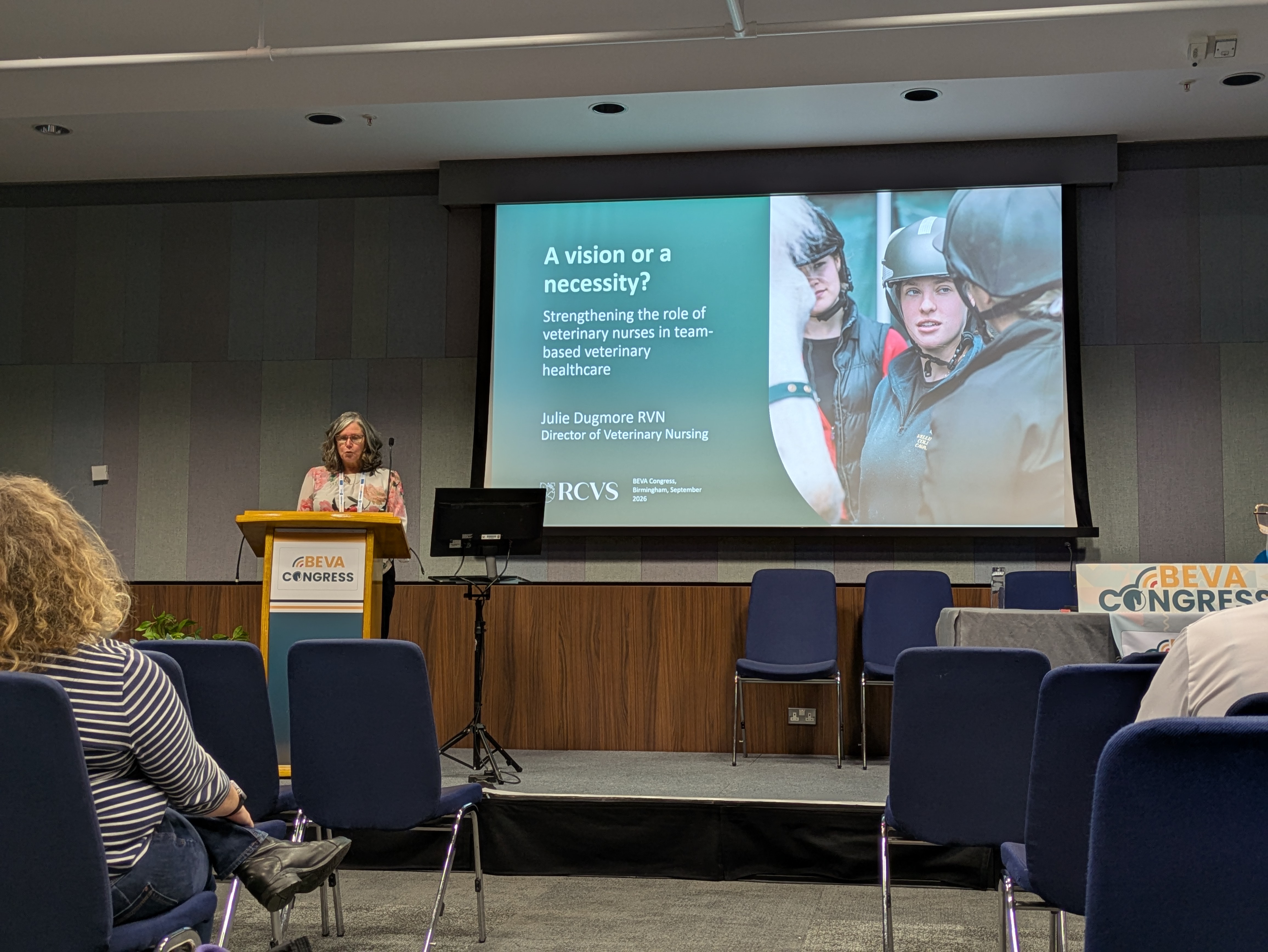
On the 10 September Leigh Hinsley, our Veterinary Nursing Project Officer, and I joined other members of the RCVS team at the British Equine Veterinary Association (BEVA) 2026 Congress where our stand was buzzing with conversations and enquiries from colleagues in the equine field.
I was honoured to present in the veterinary nursing stream and talk about one of our VN Vision projects on strengthening the role of veterinary nurses in team-based veterinary healthcare. I spoke about the project’s aims to equip practices with the tools and resources to move beyond the concept of ‘utilisation’ of veterinary nurses and support genuinely effective, collaborative team-based care – something the equine profession appears to be adopting increasingly well!
As part of my talk I explained how we are using a theory of change model to explore all the assumptions, barriers and enablers to team-based healthcare to ensure that the outcomes are fit for purpose and offer a genuine context appropriate road map to introduce this way of working in everyday practice. In doing this, I challenged those in attendance to consider, in their own professional lives the question of “When you think about excellent team-based equine veterinary healthcare, what does that look like?” and “What’s the one thing your equine team could do differently tomorrow to make better use of its veterinary nurses?”
The rest of the session brought these questions to life when I heard some excellent examples of effective team-based equine care. For example, Penny Browning from Cliffe Equine Hospital shared her experience of working with dual qualifications as an RVN and equine dental technician, while Cassie Woods, Partner at Lower House Equine Clinic, explored the opportunities offered by ambulatory equine nursing services. Jessica Woolrich from VetLed also discussed empowering equine veterinary nurses in the workplace.
Together, the presentations demonstrated the breadth of expertise veterinary nurses can bring to equine healthcare, and what can be achieved when teams create the culture, confidence and opportunities for that expertise to flourish.
A huge thank you to everyone who stopped by the RCVS stand, joined the session and shared their experiences with us. This VN Vision project is about turning ambition into meaningful change across the whole veterinary team, and conversations like these are an important part of making sure the work reflects the realities of practice.
We came away from BEVA Congress energised by what is already happening across equine practice and excited about what could come next.
VN Spark - an inspiring day celebrating veterinary nursing
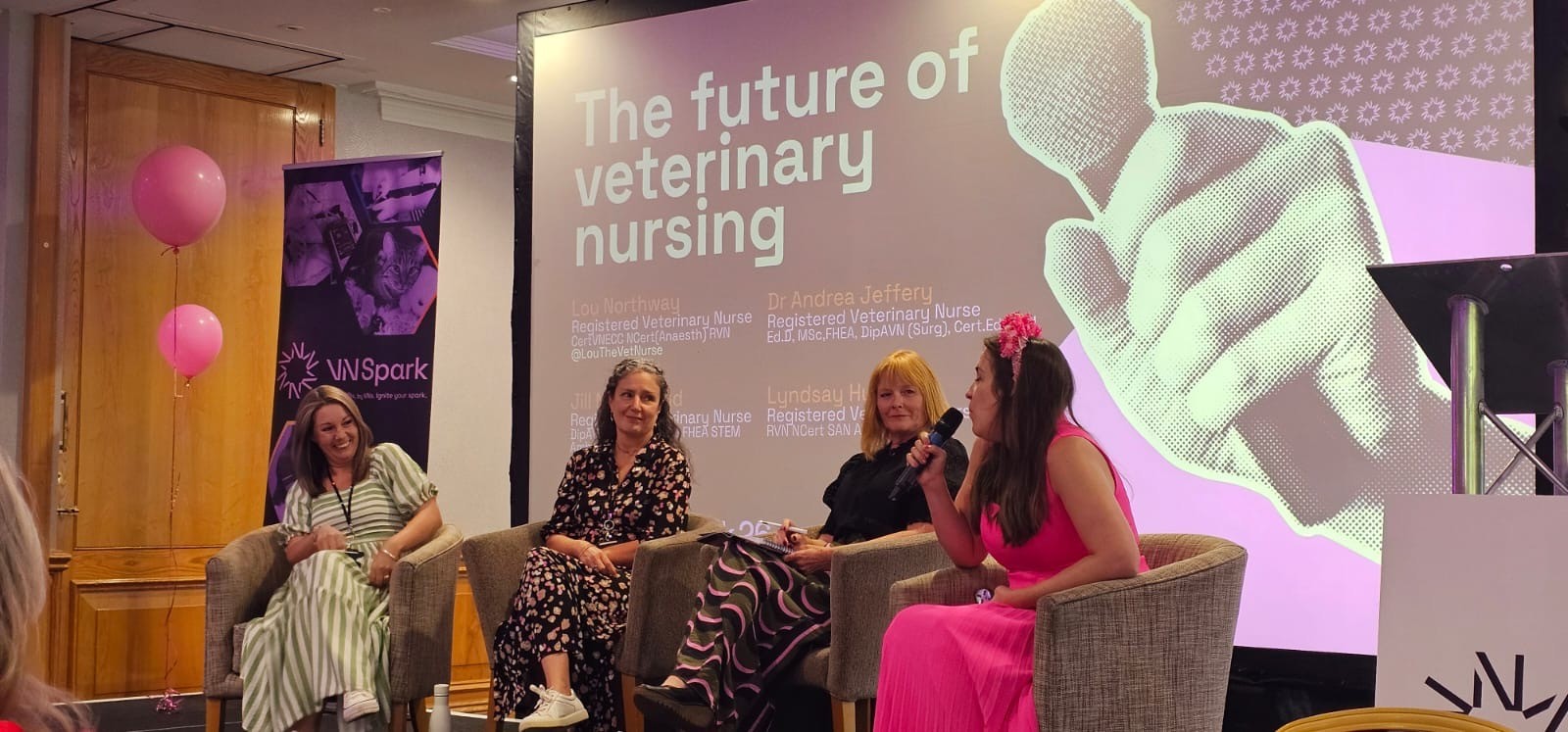
I was delighted to finally make it along to VN Spark on 12 September, having heard so many great things about the event. It really did live up to its name! The day was packed with excellent talks covering a wide range of topics, including anaesthesia, nutrition and dentistry.
What really stood out to me was the passion and expertise of the speakers - veterinary nurses who are working to their full potential and clearly love what they do and sharing that knowledge with others.
The panel discussion I took part in brought together Lou Northway, the event organiser, former VN Council Chair Andrea Jeffery, and Lyndsay Hughes, BVNA Senior Vice-Presiden. Lou did a brilliant job of keeping the discussion informal, lively and focused. We talked about some of the positive changes happening across the profession and what these could mean for the future of veterinary nursing.
It was also a great opportunity to share some of the work currently taking place within VN Vision, including Vision or Necessity?, our work to strengthen the veterinary nurse role, which is now well underway, the review of scope of practice, and the initial research looking at the veterinary nurse prescriber role.
One of the discussions was around veterinary nurses having a greater understanding of the business model of veterinary practice. Some may feel this isn't part of a veterinary nurse's role, but there is an important point here - for the work of veterinary nurses to be valued, it needs to have a value within the business. That means making sure the contribution of veterinary nurses to cases is clearly reflected in pricing and client invoices, and that the time and expertise of VNs is appropriately and consistently charged for.
Of course, the long-awaited reform of the Veterinary Surgeons Act was also discussed, and how this could bring some exciting opportunities for the profession. But I was keen to emphasise that we shouldn't wait for legislative reform to start making progress. There is so much more that veterinary nurses could be doing now, within the current legislative framework, as part of a genuinely collaborative, team-based approach to veterinary healthcare.
This is at the heart of the Vision or Necessity? work. We are developing a theory of change that will help support veterinary teams to develop a more integrated veterinary nursing role - one where the skills, knowledge and professional judgement of every team member are recognised and valued. Ultimately, this is about creating a more collaborative and sustainable profession, while improving the delivery and accessibility of veterinary healthcare for animals and their owners.
My closing comments were about how change starts at home - in our own practices and teams. We need to advocate for our role and make the most of the opportunities available to us. Of course, we can and should expect support from the organisations and leaders within our profession, but veterinary nurses themselves are also a key part of the mechanism for change.
Looking out at an audience of around 200 veterinary nurses and student veterinary nurses, all clearly passionate about what they do, I felt incredibly positive about the future. I hope that, alongside the fantastic speakers and panellists, I played a small part in inspiring some of those in the room to think differently about their own role and what they could bring to their teams.