-
-
- Advancement of the Professions Committee
- Standards Committee
- Audit and Risk Committee
- Education Committee
- Disciplinary Committee
- Charter Case Committee
- Preliminary Investigation Committee and Disciplinary Committee Liaison Committee
- Registration Committee
- Preliminary Investigation Committee
- Paper classification: some definitions
-
-
-
-
- About extra-mural studies (EMS)
- EMS requirements
- Information for vet students
- Information for EMS providers
- Information for vet schools
- Temporary EMS requirements
- Practice by students - regulations
- Health and safety on EMS placements
- EMS contacts and further guidance
- Extra-mural studies fit for the future
-
-
- Code of Professional Conduct for Veterinary Surgeons
- Code of Professional Conduct for Veterinary Nurses
- Contact the Advice Team
- XL Bully dog ban
- 'Under care' - guidance
- Advice on Schedule 3
- Controlled Drugs Guidance – A to Z
- Dealing with Difficult Situations webinar recordings
- FAQs – Common medicines pitfalls
- FAQs – Routine veterinary practice and clinical veterinary research
- FAQs – Advertising of practice names
- GDPR – RCVS information and Q&As
-
- Accrediting veterinary degrees
- Accrediting veterinary nursing qualifications
- Reasonable adjustments for student vets
- Health and disability in veterinary medicine study and practice
- The role of the veterinary schools and the RCVS
- Reasonable adjustments and the Equality Act 2010
- Reasonable adjustments and Day One Competences
- Examples of reasonable adjustments for vet students
- Annex
- Reasonable adjustments for student vets - summary
- Reasonable adjustments for student veterinary nurses
- Health and disability in veterinary nurse education and training
- Reasonable adjustments for students and the UK disability discrimination legislation
- Educational assessment of veterinary nurses
- Roles of key stakeholders in the application of reasonable adjustments
- Examples of reasonable adjustments for vet nurse students
- Embracing reasonable adjustments for student vet nurses - summary
- External review of the RCVS by ENQA
- Requirements for remote and online student assessments
Lauren Hargrave
RVN
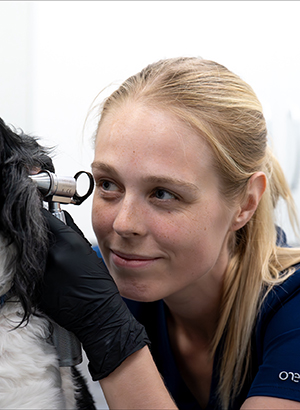 Proposers
Carly Lynn Blann RVN
Marie Claire Hatch RVN
Contact details
M 07979 195887
Candidate biography
I entered the veterinary industry in 2014, working as a receptionist with no knowledge of veterinary nursing. Observing the skills, scope of practice, and vital role of veterinary nurses inspired me to pursue this path. I completed an Access to HE qualification and then a Veterinary Nursing degree at University Centre Sparsholt, qualifying as an RVN in 2020. After my student placement and graduate role at Vets for Pets Hayling Island, I spent two years locuming, expanding my knowledge base and clinical skills. In 2022, I began a BSc in Applied Animal Behaviour, graduating with honours, in 2024.
I then settled at Vets for Pets Shirley, where I loved that RVN skills were fully utilised. Since joining, I have progressed from RVN to Deputy Head RVN and now People Manager. Since 2024, I have collaborated with the practice owner (also an RVN) to expand our consults into a team-based approach and build on schedule 3 surgeries. We have shared our model at RCVS VN Vision seminars and presented at BVNA Congress, highlighting how RVNs can maximise their role within legislation. I continue to advocate for advancing veterinary nursing and look forward to sharing our approach more widely this year.
Candidate statement
- Why do you want to stand for VN Council?
I want to stand for the VN Council because I am committed to advancing our profession and contributing to the conversations shaping the future of veterinary nursing. My main focus is advancing career opportunities for veterinary nurses. I want our additional qualifications to carry real value, enabling us to develop our skills, pursue our interests, and take on greater responsibilities.
I want to strengthen collaboration with veterinary surgeons and promote a team-based approach, which I believe is the future of both our professions and essential for improving patient care. By joining the VN Council, I hope to contribute to these important discussions and help shape a profession where growth is achievable for all.
The period from 2026 onwards is especially critical, with the current consultation on legislative reform and the subsequent changes to the Veterinary Surgeons Act. As a practicing RVN in first opinion small animal practice, I bring the insights of a nurse from day-to-day clinic experience. Over the next three years, there will be extensive discussions about the role of veterinary nurses, and I want to ensure that the perspectives of everyday practicing veterinary nurses are represented.
- What can you bring to VN Council?
I can bring practical ideas to the VN Council that promote a collaborative approach to veterinary care. Drawing on my experience empowering nurses in practice, managing a team, and working confidently within the framework of Schedule 3, I understand how delegation and support can expand the role of veterinary nurses and improve patient care.
I also strongly advocate for progression. Progression for veterinary nurses should be real and rewarding. I want qualifications and skills to lead to responsibility, and nurses to feel empowered within a team. By providing RVNs with the resources and opportunities for progression, we can grow a profession where career development is meaningful and patient care excels.
I aim to support other veterinary nurses in embracing a meaningful role in veterinary care and ensuring our skills are fully recognised and utilised effectively. I will continue this approach as legislation evolves.
- What relevant experience do you have?
I have demonstrated it is possible to work with a team-based approach to care, collaborating closely with veterinary surgeons to achieve the best outcomes for patients.
Through my experience in people management, I have seen how enabling nurses to take on responsibilities, contribute ideas, and work as part of a cohesive team improves patient care and professional satisfaction. I want to bring this experience to the VN Council and share these team focused ideas with the wider profession, empowering RVNs to recognise just how important their role is to veterinary care.
My experience working within the boundaries of Schedule 3 has given me a strong understanding of what RVNs can achieve with appropriate delegation. It has also highlighted the limitations of our current legislation and the areas where reform could further enhance a team-based approach, improving job satisfaction for both veterinary surgeons and nurses by sharing responsibilities more effectively.