-
-
- Advancement of the Professions Committee
- Standards Committee
- Audit and Risk Committee
- Education Committee
- Disciplinary Committee
- Charter Case Committee
- Preliminary Investigation Committee and Disciplinary Committee Liaison Committee
- Registration Committee
- Preliminary Investigation Committee
- Paper classification: some definitions
-
-
-
-
- About extra-mural studies (EMS)
- EMS requirements
- Information for vet students
- Information for EMS providers
- Information for vet schools
- Temporary EMS requirements
- Practice by students - regulations
- Health and safety on EMS placements
- EMS contacts and further guidance
- Extra-mural studies fit for the future
-
-
- Code of Professional Conduct for Veterinary Surgeons
- Code of Professional Conduct for Veterinary Nurses
- Contact the Advice Team
- XL Bully dog ban
- 'Under care' - guidance
- Advice on Schedule 3
- Controlled Drugs Guidance – A to Z
- Dealing with Difficult Situations webinar recordings
- FAQs – Common medicines pitfalls
- FAQs – Routine veterinary practice and clinical veterinary research
- FAQs – Advertising of practice names
- GDPR – RCVS information and Q&As
-
- Accrediting veterinary degrees
- Accrediting veterinary nursing qualifications
- Reasonable adjustments for student vets
- Health and disability in veterinary medicine study and practice
- The role of the veterinary schools and the RCVS
- Reasonable adjustments and the Equality Act 2010
- Reasonable adjustments and Day One Competences
- Examples of reasonable adjustments for vet students
- Annex
- Reasonable adjustments for student vets - summary
- Reasonable adjustments for student veterinary nurses
- Health and disability in veterinary nurse education and training
- Reasonable adjustments for students and the UK disability discrimination legislation
- Educational assessment of veterinary nurses
- Roles of key stakeholders in the application of reasonable adjustments
- Examples of reasonable adjustments for vet nurse students
- Embracing reasonable adjustments for student vet nurses - summary
- External review of the RCVS by ENQA
- Requirements for remote and online student assessments
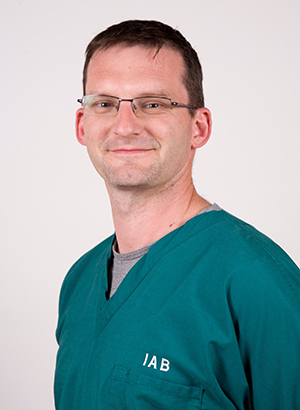
Mr Ian Battersby
BVSc DSAM DipECVIM-CA FRCVS
 Candidate 2 of 15
Proposers
Mr Ronan Doyle MRCVS
Miss Jade Statt FRCVS
Contact details
W http://www.youtube.com/@IB1999-n3k
Candidate biography
A committed clinician with experience in private practice, charities, governance, leadership, One Health and global organisations. Brings a broad experience to the wide-ranging issues facing the modern profession.
Graduated Bristol 1998. One year mixed practice then 18 months companion animal primary care, then a four-year residency, at Bristol, in Small Animal Internal Medicine.
2006-2022 Davies Veterinary Specialists, as Clinician, Head of Service, Director, then Part-Owner.
Committee member Small Animal Medicine Society (2007-2017; including 3 years as Chairman) and BSAVA (Education Committee and Companion Associate Editor).
A trained expert witness (defence) in RCVS Disciplinary cases.
In 2012, conceptualised and led the team responsible for developing the PROTECT antibiotics scheme, received the BSAVA Melton Award in 2013.
2013-2023 Chairman of Mission Rabies and member of the Defra Core Rabies Group since 2015.
2022-2025 Global Pharmaceutical Stewardship Lead for Mars Veterinary Health, collaborating with clinicians/academics across North America, Europe, and Asia. Member of National Institute of Anti-Microbial Resistance (AMR) Research and Education (USA) advisory board and Infection Prevention Society (USA) veterinary working party.
Current Positions/Memberships:
Independent Clinical Consultant.
Trustee, Mission Rabies/Worldwide Veterinary Service.
StreetVet Specialist Advisor Board.
Antibiotics Stewardship Group Committees (RUMA, CAAMS (USA), UK Wildlife).
Vet Sustain Parasiticide Group.
Candidate statement
- Why do you want to stand to be a member of RCVS Council?
This critical period for the veterinary professions, bringing opportunity but also risk. Significant inter-related challenges affect all members of the profession, irrespective of position, experience, leadership responsibilities or organisation. Work force shortages, the CMA investigation, care and welfare standards, public confidence, career sustainability and mental health all require thoughtful and considered action.
The Veterinary Surgeons Act (VSA) is woefully outdated. Currently, the RCVS can only regulate individuals. Practice structures, are increasingly complex, with increasing non-veterinary management and leadership. Without regulation of all decisions that affect clinical practice, potential impacts on colleagues’ wellbeing and animal welfare are unaccountable in a professional context. Regulatory oversight for veterinary allied professionals is lacking.
It is imperative, we grasp the unique opportunity of the government's public consultation, to advocate for a new VSA broadening the College's authority to uphold animal welfare, protecting the public interest, and maintaining professional standards. Revising the disciplinary process, in line with modern practice, should provide more supportive outcomes, in the interest of the public and the professions. With ongoing advancements in technology, especially Artificial Intelligence, flexible and subtle planning of any reforms is essential – “We must get it right”.
I have commitment and experience to make a difference.
- What do you think you can bring to RCVS Council?
Throughout my career, I have aimed to remain measured, listen actively, and act with integrity; balancing optimism with pragmatism while embracing change and growth. As my non-clinical responsibilities increased, I undertook training in a variety of areas such as leadership, management and workplace psychology. My committee roles enhanced my skills in developing group consensus.
In clinical practice I developed communication, management and conflict resolution skills to maintain a positive, productive, calm and supportive atmosphere within my teams. I have worked on initiatives that have required me to consult and develop consensus between professionals from different sectors and continents.
My dyslexia has shaped my problem-solving approach, fostering emotional intelligence, lateral thinking and resilience. I have developed effective strategies to overcome challenges and continually seek improvement, learn and understand. These strengths have driven innovation in projects such as the creation of the PROTECT Antibiotic prescribing scheme (2012) and Mission Rabies, where I served as founding Chairman.
My lateral thinking and my determination to highlight and solve difficult problems will be valuable during the reform process. I will support the RCVS to advance this agenda by constructively challenging to ensure any changes are effective now and in the future.
- What relevant experience do you have?
My career has unique diversity; throughout I remained focused on animal welfare and supporting their human caretakers and my colleagues. My experience includes roles as a clinician, team leader in both independent and corporate environments, and a practice owner.
My committee experience spans practice, veterinary organisations, government (Defra), and charity (Mission Rabies/WVS) where I have learnt how to develop productive consensus. My Mission Rabies/WVS and pharmaceutical stewardship roles have given me oversight of large, multi-national operations in a range of contexts. I can consider varied perspectives, seeing the bigger picture but also the impact at an individual level, applying insights and learnings from diverse opinions and asking critical questions to ensure that reforms address complex objectives.
In 2010, I collaborated with medical professionals to develop interventional radiology techniques for veterinary patients. This highlighted the benefits of cross-disciplinary teamwork, which later shaped my work in areas like antimicrobial resistance.
I have been an expert witness in full disciplinary hearings. Observing the mental health impact on individuals subject to these proceedings was significant, and I can use my reflections to facilitate reform such as speeding up the process and avenues for professional development rather than suspension if expected standards are not met.