-
-
- Standards Committee
- Advancement of the Professions Committee
- Audit and Risk Committee
- Education Committee
- Disciplinary Committee
- Charter Case Committee
- Preliminary Investigation Committee and Disciplinary Committee Liaison Committee
- Registration Committee
- Preliminary Investigation Committee
- Paper classification: some definitions
-
-
-
-
- About extra-mural studies (EMS)
- EMS requirements
- Information for vet students
- Information for EMS providers
- Information for vet schools
- Temporary EMS requirements
- Practice by students - regulations
- Health and safety on EMS placements
- EMS contacts and further guidance
- Extra-mural studies fit for the future
-
-
- Code of Professional Conduct for Veterinary Surgeons
- Code of Professional Conduct for Veterinary Nurses
- Contact the Advice Team
- XL Bully dog ban
- 'Under care' - guidance
- Advice on Schedule 3
- Controlled Drugs Guidance – A to Z
- Dealing with Difficult Situations webinar recordings
- FAQs – Common medicines pitfalls
- FAQs – Routine veterinary practice and clinical veterinary research
- FAQs – Advertising of practice names
- GDPR – RCVS information and Q&As
-
- Accrediting veterinary degrees
- Accrediting veterinary nursing qualifications
- Reasonable adjustments for student vets
- Health and disability in veterinary medicine study and practice
- The role of the veterinary schools and the RCVS
- Reasonable adjustments and the Equality Act 2010
- Reasonable adjustments and Day One Competences
- Examples of reasonable adjustments for vet students
- Annex
- Reasonable adjustments for student vets - summary
- Reasonable adjustments for student veterinary nurses
- Health and disability in veterinary nurse education and training
- Reasonable adjustments for students and the UK disability discrimination legislation
- Educational assessment of veterinary nurses
- Roles of key stakeholders in the application of reasonable adjustments
- Examples of reasonable adjustments for vet nurse students
- Embracing reasonable adjustments for student vet nurses - summary
- External review of the RCVS by ENQA
- Requirements for remote and online student assessments
Dr Benjamin Kennedy
BSc MSc BVetMed Mem.RES MRCVS
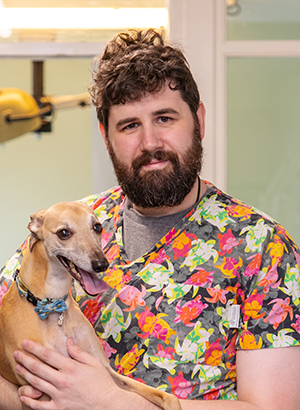 Candidate 7 of 15
Proposers
Dr Mark Naguib MRCVS
Dr Harriet Nicholson MRCVS
Contact details
A Invertivet Bearded Vets Ltd, Milton Keynes MK13 7AD
M 07515 961 917
Candidate biography
Benjamin is a companion animal and exotic veterinary surgeon based in Milton Keynes. He runs Invertivet Bearded Vets, a company focused on facilitating veterinary care, telemedicine, and research for invertebrate and exotic animals. He has worked for a large number of practices as a locum, providing standard and ECC veterinary care across companion and exotic species.
Benjamin’s academic background, with previous degrees in biochemistry and genetics and molecular biology and viral pathology, supports his interest in evidence-based medicine and proportionate regulation.
Benjamin is actively involved in professional societies and currently sits on the steering committees of the Veterinary Invertebrate Society and the British Bee Veterinary Association. He previously served as a council member of the British Veterinary Zoological Society, having input into several of the BVA committees. He regularly publishes articles and presents at conferences, helping to raise awareness of exotic and invertebrate medicine.
Candidate statement
- Why do you want to stand to be a member of RCVS Council?
Why I am standing:
I love being a vet. I love this profession. I care deeply about it and my colleagues who work so hard to deliver care. I think many of us are struggling with the state of the profession today; much of that struggle has been laid bare by the CMA review.
I put myself up for Council last year in response to the crises facing the veterinary profession, and wanting to ensure that regulation remains proportionate, transparent and supportive. I would like to thank everyone who stood behind me last year. Since then the situation has become more complicated, with greater disparity between what the profession needs and what it is being given, and I am committed to doing my part to continue advocating for the profession and our patients.
I believe strongly in effective self-regulation and in the importance of maintaining an elected veterinary presence on Council. Those working on the ground are best placed to understand how regulation affects animal welfare, professional standards, and public trust in the profession.
- What do you think you can bring to RCVS Council?
I would bring:
A pragmatic, evidence-based perspective grounded in real-world veterinary practice.
An even-handed voice that will make an honest appraisal of the upcoming changes that RCVS Council will input into.
I am a bit unconventional, hence the interest in invertebrates (particularly spiders!) and their veterinary care. I intend to be awkward and difficult as I feel that any changes to the Veterinary Surgeons Act will need to be put through rigour and scrutiny!
A pro-democratic voice in favour of retaining an elected voice on Council (both for vets and vet nurses). It is those of us on the ground that know best who should be involved in our regulation.
Experience from non-traditional and emerging areas of veterinary practice, including exotic, invertebrate and telemedicine.
A broad experience (of over 90 practices) within exotic and small animal medicine.
- What relevant experience do you have?
I have worked in a range of practice environments with differing business models, from a shack in the middle of nowhere to gargantuan hospitals (seeing referral cases) and quite a bit in between. This has given me insight into how regulation affects both individuals and practices, including independent and non-standard providers.
I am actively involved in professional societies, serving on steering committees and previously as a council member, where I have contributed to governance, policy discussion, and strategic direction. This experience is directly relevant to RCVS Council and offers me an opportunity to input constructively into decisions and discussions with the Council.
I regularly publish articles and present at conferences, demonstrating an ability to communicate complex topics clearly and engage constructively with the profession. These experiences have helped me develop the skills needed to contribute to discussions and to articulate the views of the profession in a balanced and informed manner.
- Is there anything else you would like to add in support of your candidacy?
Additional points:
I’ve taken a lot of inspiration from previous Council members. I will see my role as asking inconvenient questions and holding the decisions made by the Council to account.
I believe the strength of veterinary regulation lies in maintaining a close connection between the regulator and the profession. As we respond to legislative reform, it is vital that changes enhance trust rather than undermine it.
I am particularly keen to support the profession through the implementation of the CMA review, ensuring that guidance and expectations are fair, proportionate, and mindful of the pressures faced by independent and non-traditional practices, who are particularly vulnerable to some of the proposed changes.
I also believe that the disciplinary processes should better reflect modern veterinary care. Right now the onus is completely on the individual and that needs to change.
If elected, I would approach the role with integrity, openness, and a willingness to listen. My aim would be to contribute to a Council that is transparent, has input from across the profession, and firmly rooted in the realities of veterinary practice, while continuing to protect animal welfare and public confidence.
Anything further can be found on the invertivet website.