-
-
- Advancement of the Professions Committee
- Standards Committee
- Audit and Risk Committee
- Education Committee
- Disciplinary Committee
- Charter Case Committee
- Preliminary Investigation Committee and Disciplinary Committee Liaison Committee
- Registration Committee
- Preliminary Investigation Committee
- Paper classification: some definitions
-
-
-
-
- About extra-mural studies (EMS)
- EMS requirements
- Information for vet students
- Information for EMS providers
- Information for vet schools
- Temporary EMS requirements
- Practice by students - regulations
- Health and safety on EMS placements
- EMS contacts and further guidance
- Extra-mural studies fit for the future
-
-
- Code of Professional Conduct for Veterinary Surgeons
- Code of Professional Conduct for Veterinary Nurses
- Contact the Advice Team
- XL Bully dog ban
- 'Under care' - guidance
- Advice on Schedule 3
- Controlled Drugs Guidance – A to Z
- Dealing with Difficult Situations webinar recordings
- FAQs – Common medicines pitfalls
- FAQs – Routine veterinary practice and clinical veterinary research
- FAQs – Advertising of practice names
- GDPR – RCVS information and Q&As
-
- Accrediting veterinary degrees
- Accrediting veterinary nursing qualifications
- Reasonable adjustments for student vets
- Health and disability in veterinary medicine study and practice
- The role of the veterinary schools and the RCVS
- Reasonable adjustments and the Equality Act 2010
- Reasonable adjustments and Day One Competences
- Examples of reasonable adjustments for vet students
- Annex
- Reasonable adjustments for student vets - summary
- Reasonable adjustments for student veterinary nurses
- Health and disability in veterinary nurse education and training
- Reasonable adjustments for students and the UK disability discrimination legislation
- Educational assessment of veterinary nurses
- Roles of key stakeholders in the application of reasonable adjustments
- Examples of reasonable adjustments for vet nurse students
- Embracing reasonable adjustments for student vet nurses - summary
- External review of the RCVS by ENQA
- Requirements for remote and online student assessments
Integrating learning into everyday practice
After graduating from RVC in 2005, Pam Brown joined Northumbria Vets (now called Alnorthumbria) in a mixed practice role. Eleven years on, she has moved branches but continues to work across species in a predominantly beef and sheep-focused practice. Her only significant break came in 2011, when she took a six-month sabbatical to walk from John O’ Groats to Land’s End, followed by three months of locuming around the UK.
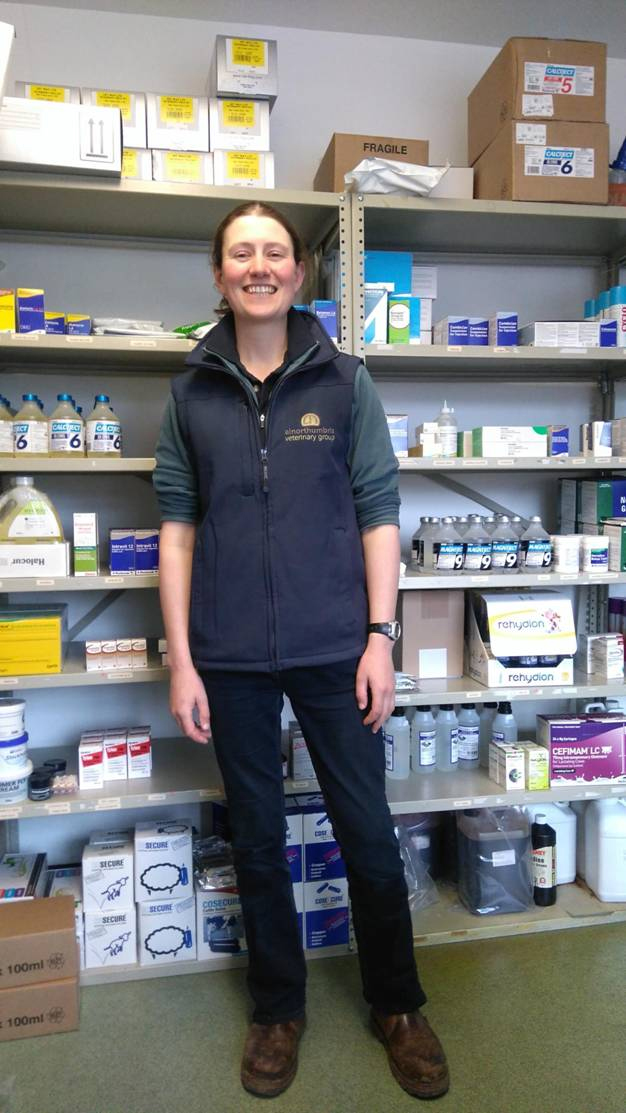
How I achieve over 100 CPD hours a year
It may make me seem like a CPD geek, but I have no trouble accruing over 100 hours of CPD each year, roughly three times the minimum requirement.
I realise that I am lucky to work for a large practice where I do a mixture of species, so we have a lot on internal meetings. Some of these involve an element of ‘housekeeping’, which obviously doesn’t count towards the CPD requirement, but the farm vet meetings I organise always contain some CPD, generally given by one of our own vets that has a special interest in a certain topic.
I’m sure many vets, especially non-directors, receive free CPD in the form of visits from reps that they just forget to record. The way I remember to do it is to note down the topic and number of hours at the top of my diary for that day, then when I have time, flick through and transfer this information to my online RCVS record.
Fitting CDP around farming and family life
Being married to a sheep and beef farmer is a great help in slotting CPD into my family life. My husband has attended two Sheep Vet Society meetings with me in the last few years and whilst some of the science is above his head, he enjoys and learns from the courses from a different angle.
Likewise, I have also attended CPD events where I have been invited through our farm business, such as meetings run by the SAC Beef Suckler Group, Moredun, our local feed suppliers etc.
CDP while socialising
A lot of the CPD that I attend has a social element to it – either lunch or dinner, or even a few days away. This might seem like a skive to some, but often there’s as much to be learned outside of the formal lectures (from fellow attendees) as there is in them.
Most of our meetings within the practice are held after the working day and fortunately our bosses realise that to tempt us there, they must provide food and drink! Sheep Veterinary Society conferences are particularly good value because the whole package includes two-and-a-half days CPD plus two or three nights’ accommodation, food and drink, all for about £500.
Building confidence beyond clinical
As I have no ambition to become involved in the business side of practice, most of my CPD is clinical; however I did attend a two-day ‘Train the Trainer’ course a few years ago to allow me to continue running our farm client meetings. As well as providing useful tips for running these courses and increasing my confidence, they were useful in finding out how different people learn and interact in general life.
On a more practical side, I attended a one-day CPD course organised by our local BVA group and Ben Strugnell who runs Farm Post-Mortems Ltd at our local carcase collection centre in Durham.
The morning was dedicated to getting our hands stuck into cattle and sheep carcases that had arrived that day, some with a clinical history, some not.
This was followed after lunch by lectures and discussion. I was able to put this into practice within just a few days when a few lambs turned up at the practice for post-mortems.
So, in summary, I welcome the RCVS’s requirement for CPD and I think many vets are easily attaining the minimum of 35 hours per year, they just don’t see it or forget to record it!
Published on 1 April 2018