Back in 2024, Jill Macdonald, our Veterinary Nursing Progression and Development Lead, and Julie Dugmore, our Director of Veterinary Nursing, launched ‘VN Vision: The future of team-based veterinary healthcare’ to gain the veterinary nursing profession’s perspective on what the future of veterinary healthcare delivery looks like, and the RVNs role in shaping this future.
The initiative, which provides a broad evidence base to inform future veterinary nursing projects, comprised a series of in-person and online events designed to capture diverse perspectives and facilitate open, unrestricted discussion.
Find out more in the VN Vision snapshot report.
Strengthening the role of RVNs in team-based veterinary healthcare
One of the key themes that emerged from the original VN Vision workshops was that veterinary nurses felt that their role was not integrated into the delivery of healthcare, their skillset was not fully recognised and utilised, and that they were not practising to their full scope and potential. Addressing this issue is the remit of the first derivative project for VN Vision.
This second phase of the project, launched in summer 2025, ran a new phase of workshops inviting all members of the practice team to have their say in how we can move beyond the concept of ‘utilisation’ of veterinary nurses, and support genuinely effective, collaborative team-based care.
Overall, the project aims to:
- Define long-term goals for VN integration,
- Identify practical, context-sensitive steps to achieve them, and
- Establish measurable indicators of success that are meaningful to the profession and the public.
What did the data show?
After running numerous successful workshops, a point of data saturation was reached, (where no novel ideas were emerging from the sessions). The project has now progressed to the next stage.
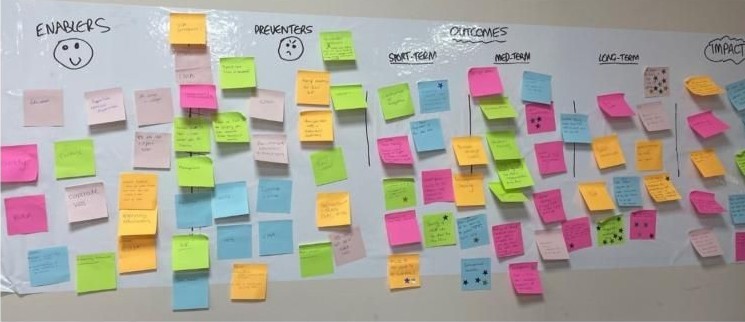
From the data, clear themes emerged, including:
- Practice culture and communication
- Team integration and interprofessional understanding of roles
- Clarity around schedule 3 and legislation
- Training needs of the whole practice team
- Readiness to perform a more integrated role
- Development of recognised advanced roles
What now?
Thematic analysis
The data is undergoing thematic analysis to enable us to visualise and organise key themes emerging from the data, and consider how this will feed into the resulting theory of change
Theory of change
The data is will be used to devise a draft theory of change to underpin the long-term implementation of the project. This will outline the intended impact, the outcomes required to achieve it, and the enablers and barriers that may influence success. We have enlisted the support of a theory of change consultant to assist us with this stage.
Expanding the team

Alongside Jill and Julie, a third member has now joined the project team. Leigh Hinsley RVN (pictured) recently started as the new Veterinary Nursing Project Officer to help drive the project forward.
Qualifying as a veterinary nurse in 2009, Leigh became Head Veterinary Nurse in 2017, predominantly using her time to support the nursing team to progress their skillset and advance their roles. Since then, she also spent 12 months as a clinical improvement project manager before joining the RCVS. Speaking about her enthusiasm for the project, Leigh said:
“As a dedicated GP RVN, this opportunity is important to me because it allows me to combine my passion for advancing the role of veterinary nurses with the opportunity to influence positive change on a wider scale. I am driven by the chance to support veterinary nurses, champion the profession, and contribute to initiatives that improve both professional experiences and animal welfare outcomes. Knowing that my work can help shape the future of veterinary nursing makes the work meaningful and rewarding.”
Our new advisory panel
A new advisory panel has also been developed, to provide critique and act as a sounding board as the project progresses. The panel comprises a mix of veterinary nursing, veterinary surgeon, educator, and RCVS staff expertise.
The general public
In addition to gaining views on this topic within the professions, it is also important to gather insights from the public on their thoughts around any potential changes, and to explain how this could make a difference to them.
The VN Vision project will provide a session at an upcoming RCVS Public Advisory Group (PAG) meeting, a panel consisting of those who use veterinary services, including owners and keepers of companion animals, equines and farm animals. In this session, the group will explore how veterinary practices can clarify new ways of working with clients. For example, how nurse only appointments can be made routine, how nurses can hold more client facing roles, and how practices can make it clear about what nurses are able to do within practice.
Looking further ahead
Once the draft Theory of Change has been completed, this will then be put out to consultation with the wider professions. The team will then look into how the final theory can be communicated to practice teams and how the principals of the theory can be effectively integrated into practices.
Further outreach and engagement
Podcast
For more information on the project and how the potential outcomes could work in practice, listen to the latest RCVS podcast episode - ‘VN visionaries – shaping the future of veterinary nursing’.
In the episode Lauren Hargrave and Carly Blann, RVNs from primary care practice, who have helped support the workshops, chat to Jill Macdonald.
Find out more and listen via our podcast page.
Events
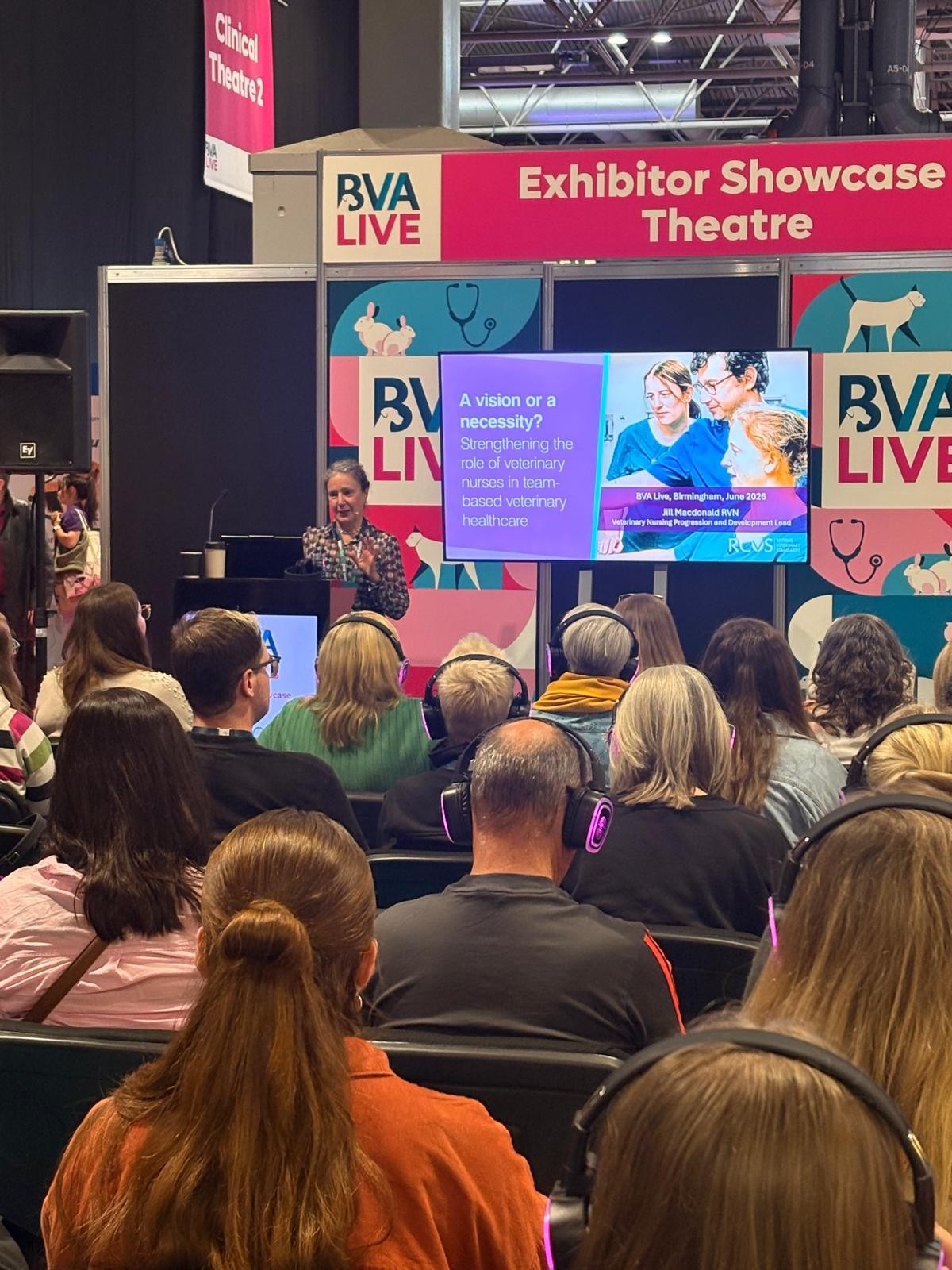
We also recently attended: