-
-
- Advancement of the Professions Committee
- Standards Committee
- Audit and Risk Committee
- Education Committee
- Disciplinary Committee
- Charter Case Committee
- Preliminary Investigation Committee and Disciplinary Committee Liaison Committee
- Registration Committee
- Preliminary Investigation Committee
- Paper classification: some definitions
-
-
-
-
- About extra-mural studies (EMS)
- EMS requirements
- Information for vet students
- Information for EMS providers
- Information for vet schools
- Temporary EMS requirements
- Practice by students - regulations
- Health and safety on EMS placements
- EMS contacts and further guidance
- Extra-mural studies fit for the future
-
-
- Code of Professional Conduct for Veterinary Surgeons
- Code of Professional Conduct for Veterinary Nurses
- Contact the Advice Team
- XL Bully dog ban
- 'Under care' - guidance
- Advice on Schedule 3
- Controlled Drugs Guidance – A to Z
- Dealing with Difficult Situations webinar recordings
- FAQs – Common medicines pitfalls
- FAQs – Routine veterinary practice and clinical veterinary research
- FAQs – Advertising of practice names
- GDPR – RCVS information and Q&As
-
- Accrediting veterinary degrees
- Accrediting veterinary nursing qualifications
- Reasonable adjustments for student vets
- Health and disability in veterinary medicine study and practice
- The role of the veterinary schools and the RCVS
- Reasonable adjustments and the Equality Act 2010
- Reasonable adjustments and Day One Competences
- Examples of reasonable adjustments for vet students
- Annex
- Reasonable adjustments for student vets - summary
- Reasonable adjustments for student veterinary nurses
- Health and disability in veterinary nurse education and training
- Reasonable adjustments for students and the UK disability discrimination legislation
- Educational assessment of veterinary nurses
- Roles of key stakeholders in the application of reasonable adjustments
- Examples of reasonable adjustments for vet nurse students
- Embracing reasonable adjustments for student vet nurses - summary
- External review of the RCVS by ENQA
- Requirements for remote and online student assessments
Dr Samantha Webster
BVetMed MRCVS
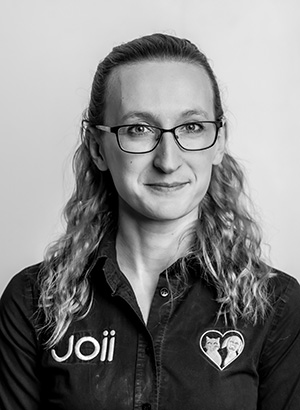 Candidate 14 of 15
Proposers
Dr Michaela Cragg MRCVS
Dr Cecile Yvon MRCVS
Contact details
A 1 White Cottages, Broughton, Malton, North Yorkshire YO17 6QN
M 07761 559 901
Candidate biography
I am a veterinary surgeon with 13 years of experience. I started out my career in mixed practice, before moving to small animal practice, initially in general practice and lately in telemedicine. During my career, I’ve accumulated decent experience in both management and leadership roles. I like to think of myself as a jack of all trades. I feel my broad experience gives me a broad understanding of how veterinary care is delivered across different systems and regulatory environments.
After several years in frontline practice, I moved into digital veterinary health and have spent the last few years working at the intersection of clinical practice, leadership, and emerging technology. I currently work in a senior veterinary leadership role, supporting the responsible development and implementation of digital tools used by veterinary teams.
My career has combined day-to-day clinical decision-making with experience in change management, professional standards, and supporting teams through periods of transformation. I am particularly interested in how regulation, education, and professional guidance can remain practical, proportionate, and credible as the profession evolves.
Candidate statement
- Why do you wish to stand to be a member of RCVS Council?
I am standing for RCVS Council because I believe the profession is at a pivotal moment and needs Council members who can bridge frontline veterinary reality with rapid change. Veterinary practice is evolving quickly; new technologies, changing business models, and increasing public scrutiny are converging at the same time as the CMA recommendations begin to take effect.
For many vets, this creates uncertainty alongside opportunity. I want to help ensure that Council decisions remain grounded in how veterinary work is actually delivered, while also being timely enough to provide clarity and confidence to the profession. Having spent most of my career in first-opinion practice and management, I understand the pressures vets face when balancing clinical judgment, client expectations, time constraints, and professional accountability. My work in digital health has shown me how quickly practice can move ahead of formal guidance if regulation does not keep pace – a real risk with the speed at which AI tools are developing.
- What do you think you can bring to RCVS Council?
I can bring both broad clinical experience and a strong understanding of how emerging change affects vets on the ground to council. My background allows me to contribute a frontline perspective that reflects the realities of modern practice across different settings and ownership models.
I also bring experience in digital health and artificial intelligence, with a focus on governance, safety, and professional accountability. AI is already influencing veterinary workflows, and Council has an important role in ensuring that guidance is timely, proportionate, and focused on supporting good clinical decision-making rather than creating uncertainty or fear. Additionally, I bring leadership experience in complex and fast-moving environments.
- What relevant experience do you have?
I have 13 years of experience in general veterinary practice and senior leadership roles. This has given me a broad understanding of clinical decision-making, regulatory frameworks, and the operational realities of veterinary work. During my time in practice, I held management responsibilities, supporting teams and contributing to clinical standards.
For the past six years, I have worked in digital veterinary health in senior leadership roles. This has involved engagement with professional governance, ethical use of technology, risk management, and change implementation. Across my career, I have worked closely with multidisciplinary teams, ensuring alignment of business goals with professional standards.
- Is there anything else you would like to add in support of your candidacy?
I am standing as an independent candidate committed to the long-term interests of the veterinary profession, animal welfare, and public confidence. I believe Council works best when it reflects a wide range of perspectives and engages constructively with complex issues. My aim is to contribute thoughtfully, listen carefully, and approach decisions with integrity and fairness. I am motivated to support a learning-focused professional culture where standards are clear and guidance is practical.