Having attended BVNA Congress as a delegate in the past, it was an honour to represent the RCVS alongside my VN Vision colleagues Jill Macdonald and Julie Dugmore, and other members of the RCVS team. We spent three days talking to nurses from all corners of the sector about RCVS projects and how they could get involved. The Vision or Necessity project, part of our wider VN Vision initiative, elicited some brilliant conversations and connections.
Many delegates hadn’t previously heard about the project and its aim to help strengthen the role of veterinary nurses in team-based veterinary healthcare. When asked how much team-based care was currently provided in practice, there was a real mixed bag of responses. A lot of nurses understood the benefits and wanted to encourage this approach but didn’t know what steps to take to make this vision a reality – a key aim of the project!
Not just nurses ‘doing more’
Team-based veterinary healthcare isn’t just about nurses ‘doing more’. It’s about integrating veterinary nurses into the care pathway so they can conduct fulfilling and impactful work, support veterinary surgeons by sharing the cognitive load associated with patient care, and allow veterinary care assistants to contribute to their full potential.
At its broadest level, it aims to improve veterinary team wellbeing, reduce burnout, support retention, increase accessibility for clients and patients, and provide more contextualised patient care. The project also considers both the enablers and barriers, because if this way of working was easy to install, we would all be doing it already!
Why now?
With awareness of the project still growing, it was particularly important to talk to the profession at this stage, because we now have a draft Theory of Change (ToC) - a roadmap that sets out the changes we want to see, and the activities needed to achieve them.
The ToC was developed using data gathered from workshops over the past two years. In 2027, it will be shared with the veterinary profession for feedback, alongside a baseline survey and focus groups that will help review and refine the proposed outputs and activities. These are incredibly important stages, because this will allow veterinary nurses, surgeons and all members of the practice team the opportunity to influence the work. This will help to ensure that everything the project produces is robust, practical and delivers maximum benefit to the profession.
At BVNA, we also spent time recruiting nurses with strong voices in the profession, and who already encourage this way of working, to volunteer as our Vision or Necessity champions. In simple terms, they will support us in spreading the word about the ways in which people can engage and contribute to the project work - the broader the input we receive, the stronger the outputs will be.
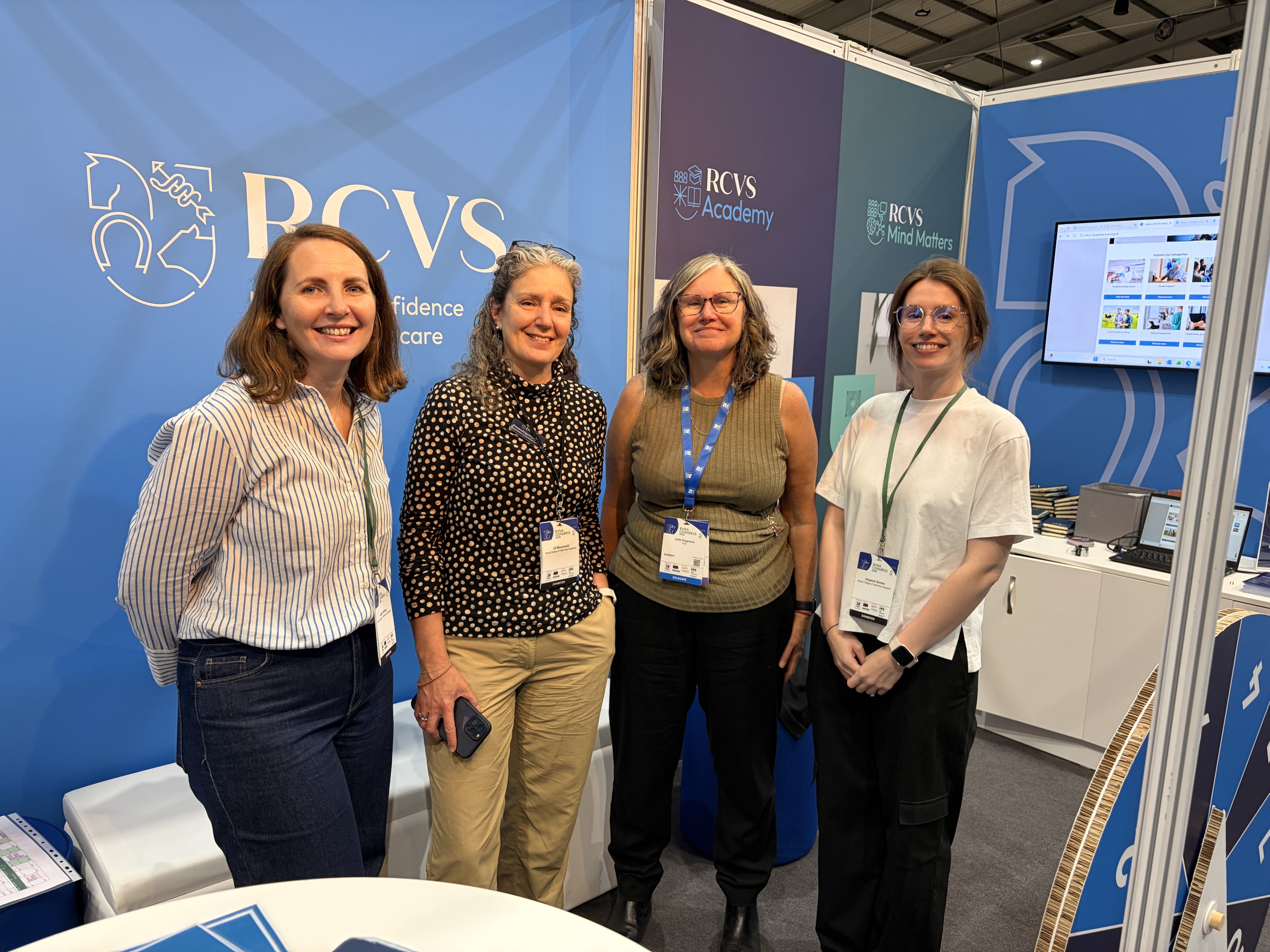
Leigh Hinsley RVN, Jill Macdonald RVN, Julie Dugmore RVN and Abigayle Gomez RVN (left to right) on the stand at BVNA Congress
Personal reflections
Personally, I always appreciate the time to network with the profession, to squeeze in real life hugs, conversations and connections. There are so many inspirational colleagues working on brilliant initiatives, and I always leave events like BVNA with a renewed sense of purpose and, more importantly, hope. Hope that the profession we chose with such love and ambition continues to move forward on an exciting trajectory. When things can feel heavy at times, being reminded of that is both important and refreshing.
The future of team-based veterinary healthcare cannot be shaped by one organisation alone, and we look forward to working with the profession and professional bodies as this important work progresses. The conversations at BVNA Congress reinforced the importance of this work and highlighted the profession's appetite to be part of shaping the future. We look forward to continuing these conversations as the project enters its next phase in 2027.