Celebrating Black History Month
Every October, the RCVS marks Black History Month - a time to honour Black heritage, celebrate achievements, and deepen understanding across our professions.
October marks Black History Month in the UK, with this year's theme being "Honouring our communities". At the RCVS, we have used this month to reflect on the work of professionals outside of practices and hospitals, and how their efforts contribute to strengthening the veterinary community. In light of this, Dr Donald Palmer, an associate professor of immunology at the Royal Veterinary College, spoke to the RCVS about the importance of immunology and his role within the college, plus his academic journey and how it has been shaped by identity and heritage.
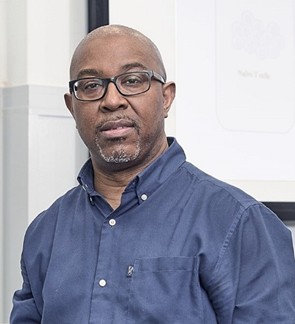
My journey started by studying Medical Sciences at Bradford University, followed by a master’s degree in Immunology at King's College London. I undertook a PhD at Medical Research Centre (MRC), Clinical Sciences Centre, Northwick Park Hospital, encompassing both immunology and genetics. Subsequently, I worked as a post-doctoral scientist in laboratories at Cancer Research and Imperial College London. In the latter I successfully obtained an MRC Career Development Award to run my own research laboratory and became a research lecturer.
I joined the RVC in 2022 and am currently an associate professor of immunology. My main research interest is focused on understanding the effect of age on the immune system, and I teach several undergraduate and postgraduate courses along with supervising undergraduate and postgraduate research projects.
What attracted me to immunology was the concept of immunological memory and how antibodies can cross the placenta, providing protection to newborns during the early stages of life. I was fascinated by how the immune system can recognise and remember previous encounters with pathogens and use this knowledge to protect against future infections in both animals and humans. This sparked my curiosity about the complexity of the immune system and its role in protecting health across species.
Over time, this interest developed into a desire to understand these mechanisms in greater depth and explore how this knowledge could be applied to improving animal and human health and wellbeing.
My parents have been my greatest source of inspiration and support throughout my life and career. During my PhD, my supervisors, Professors Elizabeth Simpson FRS and Julian Dyson, were instrumental in helping me appreciate the importance of research and its contribution to scientific understanding. Professor Mary Ritter played a particularly important role in my career development by allowing me to develop my independence as a researcher and encouraging me to apply for an MRC Career Development Award, which I successfully obtained.
At the Royal Veterinary College (RVC), I have benefited from the encouragement and support of many wonderful colleagues. I would particularly like to acknowledge Professor Gary Baxter and Professor Stephen May for their encouragement and for allowing me to lead the Bioscience programme for a period of time. I am also grateful to Professor Andy Pitsillides for his guidance and support in helping me navigate the higher education landscape. Their support helped me develop my leadership experience and confidence. Looking back, I feel fortunate to have had the guidance, encouragement and trust of people who not only supported my development but also helped me recognise and realise my potential.
One of the most rewarding aspects of my role is supporting students throughout their academic journey, helping them navigate challenges, develop their confidence and realise their potential.
Seeing students progress, overcome obstacles and ultimately graduate is particularly fulfilling. It is a privilege to play a part in their success and to know that I have contributed, in some way, to shaping their future and opening doors to new opportunities.
I’m particularly proud of securing an MRC Career Development Award, which gave me the opportunity to develop my independence as a researcher and establish my own research direction. I’m also proud of my contributions to teaching and supporting students at the Royal Veterinary College, particularly seeing them develop, overcome challenges and graduate. Having the opportunity to lead the Bioscience programme was another important milestone.
Another significant highlight was receiving the inaugural British Society for Immunology (BSI) Diversity and Inclusion Award in recognition of my leadership in advancing equality, diversity and inclusion (EDI) initiatives across immunology and the wider life sciences. I’m also proud to be part of the steering and organising committee of the Minoritised Life Scientists Future Forum, a pioneering European conference dedicated to supporting life scientists from marginalised and underrepresented backgrounds.
My parents arrived in the UK as part of the Windrush Generation, bringing with them very little but possessing an enormous determination to build a better life. Through their hard work and sacrifices, they created an environment in which I could thrive and pursue opportunities that had not always been available to them. Their resilience, perseverance and commitment to family have profoundly shaped who I am today. Their experiences have also instilled in me a strong sense of fairness, integrity and the importance of treating everyone with dignity and respect, regardless of their background or circumstances.
I believe that everyone should have the opportunity to fulfil their potential, and that we have a responsibility to help create environments in which people feel valued, included and able to succeed.
Their journey continues to motivate me to make the most of the opportunities I have been given, while recognising the importance of giving back, supporting others and helping to open doors for future generations. For me, honouring my heritage means not only recognising the sacrifices of those who came before me, but also using the opportunities they helped create to make a positive and lasting difference in the lives of others.
To me, being a Black person working in veterinary immunology is about being visible and demonstrating what is possible. I hope that by being seen in this field, I can inspire young Black people and others from underrepresented communities to recognise that they belong in science, that opportunities are open to them, and that they too can achieve success in fields they may never have imagined possible.
One person I would like to highlight is the late Professor Sir Geoff Palmer (no relation), who was a pioneering Jamaican-born scientist, human rights campaigner and educator. He came to the UK as a child in 1955 and went on to become Scotland’s first Black professor in 1989. Renowned for his groundbreaking research in brewing science, he also dedicated much of his life to challenging racism.
His remarkable journey reminds us of the importance of recognising Black contributions to science and society, confronting uncomfortable histories, and using education to promote fairness, equality and social justice.
Be curious, stay persistent, and don’t be afraid to pursue opportunities, even when the path is unfamiliar. Veterinary immunology, and immunology in general, is a fascinating field with opportunities to make a real difference to animal and human health. Seek out mentors, build your network, and remember that your background should never limit your ambitions. There is a place for everyone in science.