


Mind Matters Initiative (MMI)
The Mind Matters Initiative (MMI) is funded and run by the Royal College of Veterinary Surgeons (RCVS). It aims to address mental health and wellbeing issues across the veterinary professions.
This blog has been produced as part of the Mind Matters Applied Mental Health Science series, which aims to promote the importance of mental health literacy for individuals, make help-seeking normalised and challenge stigma, as well as provide practical information for managers and leaders.
Please note the following article focuses on lived experience and mentions suicide. It is not intended to provide medical advice or guidance. If you need support, please contact a GP or other healthcare professional.
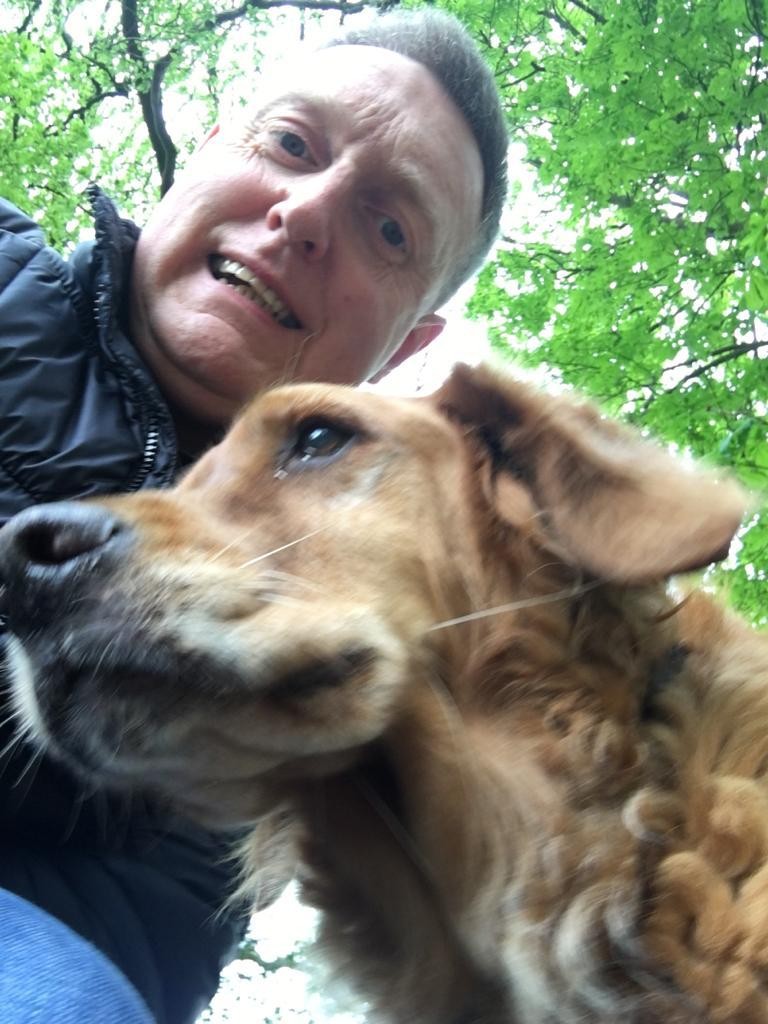
James Glass BVetMed MSc MRCVS qualified from the Royal Veterinary College in 1992 and worked in clinical practice until 2019. In 2022, he completed an MSc in the neuroscience and psychology of mental health, with a dissertation on the shame and stigma around disclosing mental ill-health in the veterinary field.
He is currently a researcher at the Suicidal Behaviour Research Lab at the University of Glasgow, where his PhD explores suicide risk among veterinary professionals, considering ways to reduce suicide risk among vets, RVNs, and students.
James has significant lived experience of long-term depression and suicidality.
When I qualified as a vet in 1992, I entered a profession where stoicism was a badge of honour and mental health was something you dealt with quietly, if at all. I loved the work: the challenge of careful diagnosis and effective treatment, the time spent and friendships with clients, the support of colleagues committed to that mix of science, care, and emotional toil that often defines our profession. Without questioning it, I suppose, without really realising it, I also absorbed and developed an attitude that resilience meant getting on with it, being able to cope alone.
In 2019, after a prolonged episode of major depressive disorder that brought me close to suicide, I stepped away from veterinary work. Writing that still feels stark. It was not only the loss of a job; it felt like the collapse of an identity I had spent decades building. I suspect many vets and RVNs reading this will recognise that same fear. Depression exploited that change, turning it into an accusation, a sense of failure.
Looking back, I can see that threaded through that period of loss was something else: survival. I do not want to dramatise what happened, nor to oversimplify it, and I am particularly wary of narratives that imply there are easy answers or ‘if you just…’ solutions. Instead, I offer an honest account of what it is like to live with long-term depression and recurrent suicidal thinking, and to keep going anyway. From that vantage point, hope doesn't arise from denial or false optimism, but from experience - experience that shows survival is possible, that suffering can coexist with care, treatment, and moments of meaning, and that hope, often quiet and hard-won, remains both reasonable and necessary.
One of the hardest things to accept has been that depression, for some of us, is not an acute illness with a clear endpoint. It can be chronic, relapsing, and often inseparable from the way we understand ourselves and the world around us. I spent a long time believing that the ‘correct’ mix of insight, exercise, medication, and support would lead to permanent recovery. A long and severe relapse in 2023 exposed the limits of that belief, and I recognise the sense of having ‘failed’ only deepened the episode itself.
Long-term medication is now part of my life. Like many, I was initially ambivalent, concerned about side effects, dependence, and the unspoken belief that needing tablets somehow reflected a personal inadequacy. Experience has softened those views. Antidepressants have not transformed my mood, but they have reduced the intensity of the worst periods. At their best, they lower the background noise of despair and allow other forms of support - therapy, routine, relationships, and self-care - to function. They are not a cure, but they are a tool, and, for me, an essential one. Accepting that I may need them indefinitely has been an exercise in humility rather than defeat.
I have also found counselling to be important, though in a different way. It took time to find a therapist I trusted, and time again to learn how to be a patient rather than a ‘let’s fix-it’ vet. Counselling offered the opportunity to explore personal vulnerability without immediately trying to fix it. It has helped me recognise my (often unhelpful) personal patterns of thinking and given me tools to more often be able to just ‘sit’ with hard and dark thoughts, recognising them for what they are, and reducing their impact.
Exercise too has found a place, though not in the way glossy wellness articles often suggest. I do not run to ‘beat’ depression. I run because, for an hour or two, I can set aside unhelpful thoughts and feel honest and grounded. There is no doubt that it helps to have the Lake District on my doorstep, as well as the regular company of a great friend who is an accomplished ultra-runner. On difficult days, running does not make me happy, but it often makes me feel less trapped. If you are considering exercise to help with your own challenges, choose something you can return to gently, without turning it into another arena for self-judgement.
Perhaps the most unexpected development for me has been a gradual move into mental health research. The way we understand depression and suicidal risk has shifted away from simple ‘chemical imbalance’ explanations towards a more clearly biopsychosocial model. My PhD research is as part of a team at the Suicidal Behaviour Research Lab at the University of Glasgow, where the integrated motivational–volitional (IMV) model of suicidal behaviour was developed (O’Connor & Kirtley, 2018), emphasising the interaction between biological vulnerability, psychological processes, and social and occupational context. For those in veterinary workplaces, that context matters. Research is increasingly recognising the cumulative impact of workload, moral injury, professional isolation, and the daily pressures of significant responsibility for life-and-death decisions. The high burden of distress within our professions reflects not individual fragility, but the predictable consequences of working in environments that place sustained emotional and ethical demands on dedicated, conscientious people.
Living with depression has made me cautious with long-term predictions. What I do know is that life with ongoing clinical depression, and life after a suicide attempt, is not a consolation prize. It is different, certainly: in my personal context often needing to be quieter, slower, and more constrained. But it can still hold meaning, connection, and moments of genuine engagement, even joy.
"Hope, in my personal context, is not the absence of darkness nor the promise that things will inevitably improve. It is the knowledge, grounded in experience and evidence, that darkness can be survived, and that recognition, support, treatment, and understanding are gradually continuing to improve."
If you are living with similar struggles, you are not broken, weak, or beyond help. You are responding, as any person might, to a complex interplay of biology, psychology, life experience, and circumstance. For many of us, continuing to live with depression and suicidal thinking is not about courage or resilience, but about access to understanding, empathy, care, and support.
Reference List
O’Connor, R. C., & Kirtley, O. J. (2018). The integrated motivational-volitional model of suicidal behaviour. Philosophical Transactions of the Royal Society B: Biological Sciences, 373(1754) - Royal Society Publishing
If you have been affected by any of the issues explored in this blog, you are not alone. Help and support is available.
NHS Support
Other sources of support
We're bringing in new requirements for individual veterinary practices to have a suicide prevention plan in place later this year.


