

Academy Live: VN Vision
An online webinar where you can have your say on the future of team-based veterinary healthcare.
In our latest blog, our Veterinary Nursing Progression and Development Lead, Jill Macdonald RVN, provides an update on the important work of the VN Vision project - a collaborative project with input from the entire veterinary team aiming to help strengthen the role of veterinary nurses in team-based veterinary health care.
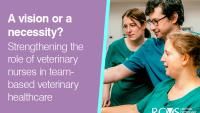

In summer 2025, we launched the second phase of our VN Vision project – running a range of workshops exploring how we can develop systems within practice that empower veterinary nurses to work to their full professional potential. In doing so, we aimed to enhance team-based healthcare, improve client experience, increase accessibility to veterinary care, and support practice efficiency.
But how can veterinary nurses be more fully integrated into multidisciplinary teams, and what steps are needed to achieve this change?
The project aims to:
The workshops are now nearing completion with consistent themes emerging across events involving veterinary professionals and support teams from across the UK. This marks an important milestone, as it gives us confidence that the insights gathered reflect a broad and representative range of perspectives from the profession.
You can read more about the foundations of this work in our VN Vision report, published in June 2025.
A paper on the VN Vision work was also published in 'The Veterinary Nurse' in December 2025:
Dugmore, J., and Macdonald, J. (2025) ‘The future of veterinary nursing: challenges, opportunities and a vision for progress.’ The Veterinary Nurse. Vol.16 (10), pp 228-234.
The workshops have focused on a key question: how can we move beyond the concept of ‘utilisation’ of veterinary nurses, and instead support genuinely effective, collaborative team-based care?
Discussions have reinforced that while there is strong appetite for change, achieving this will require not only practical adjustments, but also meaningful cultural change within practices.
Several key themes have consistently emerged from the events:
Participants identified a wide range of potential benefits, including improved efficiency in care delivery, better patient outcomes through a holistic team-based approach, increased job satisfaction across all roles, enhanced career progression opportunities, improved access to veterinary care, and better wellbeing within the profession.
Potential impacts of the project include:
Culture has been central to many discussions, including team dynamics, hierarchy, communication, trust in delegation, psychological safety, and valuing the contribution of all team members.
There is a clear need for greater understanding of roles within the veterinary team. This goes beyond shared learning environments and includes clarity around scope of practice, delegation, and how different roles contribute to patient care.
Clarity around legislation remains a key issue. While professional judgement is essential, participants highlighted the need for more practical guidance or examples of ‘good practice’ to support confident and consistent delegation.
We are now using these insights to further develop a theory of change that will underpin the long-term implementation of the project. This will outline the intended impact, the outcomes required to achieve it, and the enablers and barriers that may influence success.
The next phase of the project will involve engaging with a wider range of stakeholders to gather feedback and refine our approach. We anticipate launching a formal consultation in early 2027 to ensure the final strategy reflects the needs and perspectives of the professions.
To find out more, contact the VN Vision Team at [email protected].