
What else do I need to know about being on Council?
Term lengths, meeting frequency and financial loss allowance.
- The term of an elected member is four years. Most serve a full term but, on occasion, some may retire early. There is a maximum limit of three consecutive terms on Council, with a mandatory two-year break required before a person may stand again. Under the Code of Conduct for Council and Committee Members a mechanism is in place so that Council members may be investigated and potentially removed for issues relating to poor conduct/behaviour.
- How much time a Council member spends on Council business during their term depends on the committees and working parties on which they are asked to sit. Most RCVS committees generally sit four times a year, though some may meet more frequently depending on the nature and urgency of the business they are to discuss.
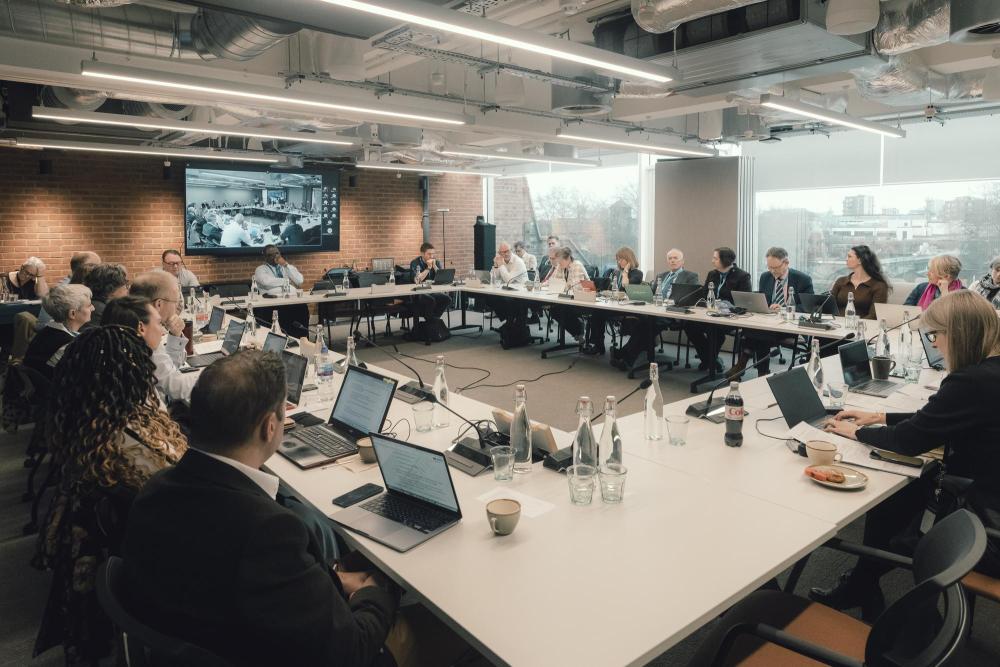
- RCVS Council meets more frequently (usually six, but up to eight, times per year) allowing it to make decisions in a more timely fashion. You may also be asked to join a working party on a particular issue, and there may be other College events and activities that you can attend on a voluntary basis.
- On average, therefore, successful candidates might expect to spend around 15 to 18 days a year on Council business in terms of formal meetings during their first year on Council. Additional time will be required to keep on top of emails, read paperwork etc.
- As your Council career develops, you may be required to take a more active role meaning that you may be expected to spend more than the average days a year on Council business, for example, if you become a Committee Chair or member of the Officer Team.
- In 2027, Council meetings are scheduled in January, March, June, July (RCVS Day), September and November. Most committee meetings are four times per year. Subcommittees and working parties meet on a more ad hoc basis.
- The RCVS tries its utmost to be a family-friendly environment, both for staff and Council members. Council and Committee meetings are planned at least a year in advance, although additional meetings may be added at shorter notice. For example, the recent Competition and Markets Authority (CMA) work had required a number of extra-ordinary Council meetings beyond those scheduled throughout the year. Generally, there are fewer meetings during the holiday periods because we follow an academic calendar.
- Council members are not paid directly for the work they do. However, we do have a financial loss allowance which is intended to compensate for lost earnings as a result of attending to RCVS business. For Council and committee members attending in-person meetings, the claim rate takes into consideration commuting time where meetings are held in-person. Financial loss allowance rates are reviewed annually and updated on Royal College Day – our Annual General Meeting – every July.
- Additional reading/administration time can be claimed at the end of the College year if the meetings had been attended:
- RCVS Council – two days
- RCVS Council committee members – one day per committee
- Chairs of RCVS Council committees – two days per committee (in total per committee, not in addition to being a member of the same committee)
- Reasonable expenses are covered for Council and committee work, including an overnight stay if that is required.
- In addition to Council, committee, subcommittee meetings, successful elected members meet with the president a minimum of three times in their first year (individually or as part of a group) to help them at the start of their Council journey.